You'll receive compassionate, data-driven goose management in East Liberty using weekly surveys, GIS mapping, and camera sensors to locate goose concentrations, nesting areas, and pathways. Our team applies habitat modifications (grass height management, 6-10 ft buffer zones, exclusion methods), implement varied deterrent methods (trained service dogs, audio systems, motion-activated sprinklers, natural deterrents), and time treatments according to nesting and molting cycles. All methods meet MBTA and state guidelines, with comprehensive records and regular audits. Look forward to more than 50% improvement in situations, safer pedestrian areas, and improved turf quality-next, discover how our plans are modified for schools, parks, and HOAs.
Main Insights
- East Liberty experts delivering humane goose deterrence: location surveys, regular observation, and immediate-response hazing to decrease problems.
- Geographic Information System mapping of water, turf, loafing zones, and pedestrian flows to target hotspots and refine tactics in real time.
- Habitat management and deterrence: creating natural shoreline buffers, turf management, sealing access areas, and setting up pond boundary and aerial wire barriers.
- Implementing rotating deterrents and behavior modification techniques: professional guard dogs, automated sprinkler deterrents, sound-based deterrents, specialized repellents, and systematic intervention methods to stop predictable behavior patterns.
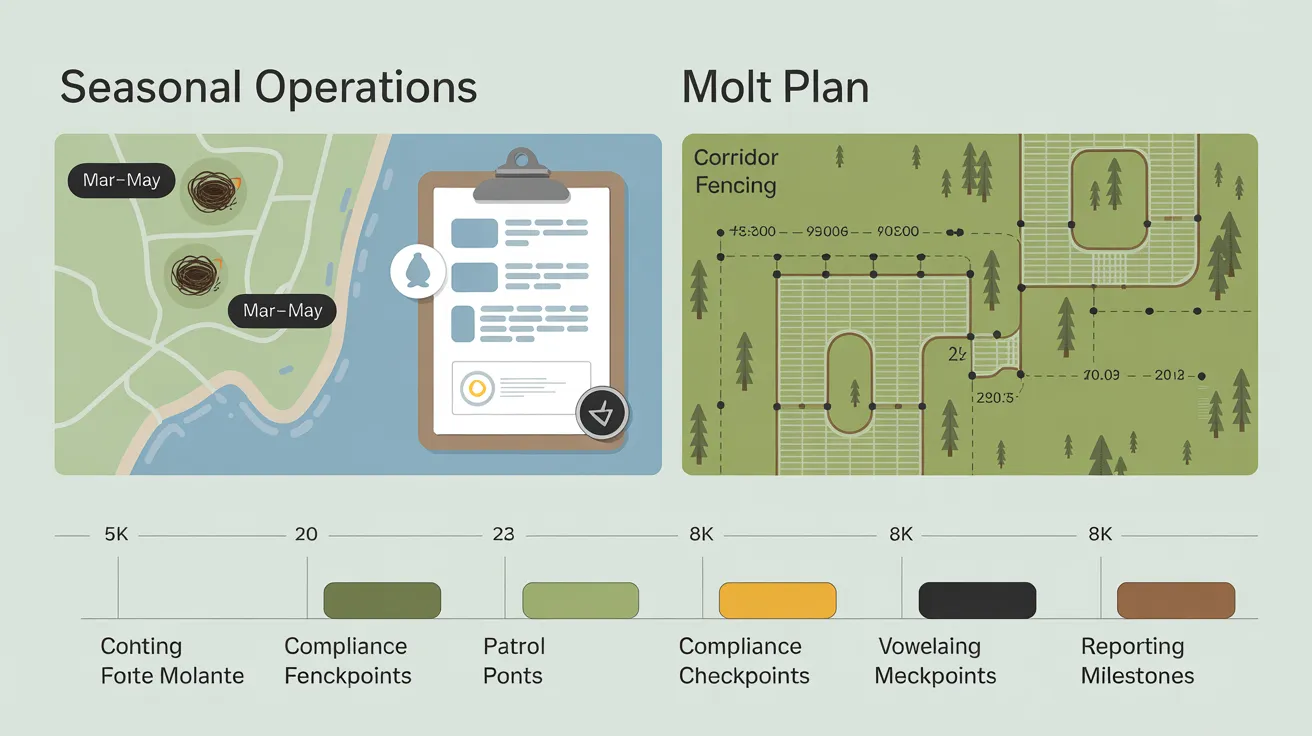
- Our seasonal work comprises nest detection and mapping during March-May, intensified molt-season herding operations, and continuous outcome assessment using cameras and weekly numeric surveys.
Professional Goose Control Solutions for Business Properties
Evaluate location specifics to create a ethical and successful goose control plan for your business premises. You'll need to quantify group density, age distribution, and nesting sites, then chart water sources, lawn spaces, and pedestrian flows. Document urban flocking dynamics at sunrise and sunset, and chart seasonal flight paths to predict seasonal influxes. Utilize GIS to analyze food availability, loafing areas, and problem locations, focusing on high-conflict nodes.
Make habitat adjustments that reduce attractiveness while avoiding harm: control turf height, limit nutrient-rich grass species, and install shoreline vegetation barriers. Implement controlled deterrence protocols including professional dogs, sight-based deterrents, and acoustic systems on varied schedules to stop acclimation. As allowed by law, implement permitted egg management to control reproduction rates. Monitor results through weekly population counts, fecal surveys, and incident documentation, then adjust strategies based on measured results.
Residential Wildlife Deterrents That Work
Try implementing animal exclusion strategies (such as securing openings, chimney covers, vent screens) with outdoor environment changes that remove attractants like available water, heavy brush, and unsecured food. Monitor and quantify results by using trail cameras and checking for tracks and scat to verify lower wildlife numbers. Include harmless repellents and equipment-registered repellent sprays, ultrasonic units, motion-sensing lights or water sprayers-and modify positioning and frequency based on wildlife patterns.
Gentle Wildlife Exclusion
Begin with proven animal-friendly exclusion methods that block entry rather click here than handling animals after they've gotten inside. Attach 18-23 gauge galvanized hardware cloth across crawlspace vents, soffit gaps, and chimney caps; attach with corrosion-resistant screws and fender washers at 4-6 inch distances. Install window screens with 0.025 inch wire or stainless mesh to prevent bats and insects while preserving airflow. Use netting barriers (polyethylene, 3/4 inch mesh) to close off eaves and porch undersides; secure with perimeter cables to prevent sagging.
Seal foundation and siding penetrations with professional-grade elastomeric caulk and backer rod; for bigger openings, apply sheet metal or mortar patching. Place one-way exclusion doors only after verifying no babies are present. Confirm security via light-leak inspections and thermal imaging, then arrange quarterly rechecks.
Yard Habitat Adjustments
The most effective deterrents typically begin by changing attractive elements and pathways around the yard. Begin by removing available water, food, and cover. Properly secure trash bins, clean up fallen fruit, and lift or cover compost piles. Drain or decrease pooled water. Prune lower branches to remove ground-to-canopy access, and clear dense vegetation that create pathways.
Implement indigenous plants to minimize desirable food options and develop less predictable habitat. Switch turf near water features with indigenous border vegetation that deter waterfowl settling. Apply organic material or stone barriers to disrupt animal trails. Implement soil improvement to support drought-resistant, dense groundcovers that close gaps wildlife exploit.
Disrupt movement routes by setting up tight lattice beneath decks, blocking gaps under sheds, and maintaining well-maintained, illuminated perimeter strips that increase exposure and reduce hiding spots.
Safe Methods and Devices for Pest Control
Though environmental adjustments decrease attractions, validated deterrents and devices provide a significant deterrent effect that changes animal behavior safely. You can establish scent barriers using natural predator scents, grape-derived repellents, or hot pepper extracts along access paths, lawn perimeters, and planting zones; renew post-rainfall for consistent results. Integrate them alongside automated water deterrents set to brief spray intervals to create unexpected deterrent stimuli. To address goose problems, use authorized repellents on lawn areas and preserve elevated greenery along shorelines to reduce landing appeal.
Set up sound-based deterrent systems strictly in positions with verified direct visibility and echo reflection is absent; alternate frequencies and schedules to minimize habituation. Integrate illumination-based prevention measures during dusk-dawn periods. Track behavior using monitoring cameras and adjust placements following monitored access patterns.
Seasonal Strategies for Breeding and Feather Renewal Cycles
As Canada geese alter their behavior and vulnerability throughout spring nesting and summer molting, you should match controls with each phase's biological patterns and legal restrictions. Track and document nesting patterns by performing weekly surveys of territories during late March to May. Find and record active nests, record clutch size, and apply permitted egg-addling or oiling methods before day 14, complying with federal and state rules. During nesting, establish and maintain buffer zones around nests, redirect foot traffic, and schedule vegetation management when attendance is lowest to minimize site fidelity.
During June and July, geese go through their molting phase. Remove or restrict access to molting shelters like dense vegetation islands and high vegetation close to water. Minimize shoreline growth to increase visibility for predators, and regulate access to loafing areas. Step up herding efforts with trained dogs prior to molting; change to corridor fencing while birds cannot fly. Plan post-molting dispersal tactics.
Behavior Modification Tactics to Reduce Aggression
Though territorial behavior in Canada geese reaches its height throughout nesting and brood-rearing periods, you can significantly reduce aggressive encounters by matching stimulus control with reliable, non-rewarding responses. Apply behavioral conditioning to decouple human presence from territorial rewards. Standardize uniform responses: halt, face the bird, hold posture, and prevent retreat until the goose yields space, then disengage without giving any reward. Use consistent timing so the relationship is obvious.
Create exclusion zones compelling geese to change direction; maintain effectiveness by ceasing acknowledgment and stopping re-entry. Utilize aversive cues (such as clapping) when noticing aggressive displays such as hissing; cease deterrents once the bird backs down. Monitor behavioral patterns, proximity thresholds, and escape durations to confirm reduced hostile behavior.
Environmentally Safe Repellents: Usage Guidelines
You can deploy natural repellents such as methyl anthranilate sprays, capsaicin formulations, and garlic oil to reduce feeding and resting without harming the geese and surrounding wildlife. Deploy these solutions prior to main feeding times in the morning and late afternoon, and repeat application following rain or watering following recommended dosages. You must synchronize timing with nesting and molting calendars in East Liberty to enhance behavioral modification while minimizing repeat treatments.
Natural Plant-Based Deterrent Solutions
Although chemical deterrents may work in the short term, natural deterrents offer a more environmentally friendly approach for deterring geese and nuisance wildlife around East Liberty properties. You can integrate native plantings with dense, upright architecture-tall grasses and sedge varieties-to reduce loafing and block access routes. Pair these with aromatic herbs such as mint, lavender, and rosemary along borders; natural compounds enhance olfactory irritation and discourage grazing. Apply capsaicin- or methyl anthranilate-based sprays to turf favored by geese; these compounds change taste response and condition avoidance. Install tall ornamental grasses to block views near water edges, limiting glide paths. Maintain vegetative buffers at least 6-10 feet deep along shorelines. Verify plant hardiness for USDA Zone 6 and confirm noninvasive selections to maintain environmental balance.
Ideal Application Timing
Since timing determines success, arrange eco-friendly repellent applications according to goose patterns and area utilization. You can achieve peak timing by matching applications with seasonal indicators and typical activities. As winter concludes, apply to turf as ice recedes; birds search for feeding areas then, so early application promotes avoidance. Apply again before spring renewal when nutrient-rich shoots appeal to flocks. During nesting period (about March-May), target perimeters and approach paths, not nests. Post-fledging, intensify shoreline and fairway treatments as family groups extend grazing ranges. Before fall movement, establish continuous coverage on loafing areas to discourage staging. Following heavy rain, irrigation, or mowing, reapply per label intervals to preserve active residues. Track goose populations and grazing intensity weekly; adjust frequency and spatial patterns to maintain repellency with limited inputs.
Exclusion Methods for Rooftops, Ponds, and Playfields
Though every location features unique constraints, effective exclusion for rooftops, ponds, and playfields requires protective measures and habitat modification that remove roosting, breeding, and resting spots. For rooftops, install roofline netting to close access under parapets and mechanical frames, and apply gutter guards to stop debris retention and nesting. Deploy low‑profile spikes or post‑and‑wire on ledges exceeding 2 inches. Seal penetrations with stainless hardware cloth. In water features, set up tensioned perimeter wire at 8-12 and 18-24 inches to prevent goose climb‑outs; incorporate overhead grid wire at 15-25 feet spacing where feasible. Minimize shoreline turf, expand vegetative buffers, and disrupt sightlines. At sports fields, set up 2-3 strand exclusion around sidelines, clear standing water, select taller fescue cultivars, and reduce edge fertilization.
Immediate Response and Constant Monitoring Support
We provide 24/7 dispatch readiness, with incident intake and technician routing started within minutes. We emphasize on-site assessment speed, determining arrival windows according to distance, traffic data, and risk severity. You'll receive continuous activity tracking through chronological monitoring, sensor readings, and trend reports that inform changes to deterrents and patrol intervals.
24/7 Emergency Response Capability
When geese interference occurs in vital locations, our dispatch readiness ensures trained technicians respond swiftly with necessary equipment and information. You benefit from a methodical response sequence that prioritizes swift deployment and personnel preparation. We organize fully equipped vehicles, outfitted with deterrent devices, deterrent systems, safety equipment, and telemetry systems in prepared response units. Field teams obtain comprehensive location profiles, including access limitations, wildlife behavior patterns, and legal parameters prior to response initiation.
We provide 24/7 call management, triage codes, and smart route planning to reduce response delays. We monitor team location, projected arrival, and inventory levels in real time. Crews follow protocols for equipment verification, radio testing, and safety protocols while traveling. Post-dispatch, we record results, refresh location-based monitoring, and plan specific check-ins, ensuring seamless transition between primary intervention and continuous observation cycles.
On-Location Evaluation Time
From the moment crews roll, on-site assessment speed translates response capability into actionable site operations. You benefit from clear arrival parameters, optimized path planning, and preliminary site details, which cut diagnostic latency. Specialists evaluate ingress points, risk sectors, animal population density, and human-wildlife interfaces within minutes, then quantify risk by position and timing. You get a dated analysis that aligns identified markers with recommended controls and equipment deployment.
We measure the time between dispatch and visual verification, rather than just arrival at the location. This measurement determines the staging of protective gear, deterrent tools, and capture devices. We provide a precise action determination for immediate response, plus sequenced steps ordered by safety and efficacy. The outcome delivers a quick, reproducible evaluation cycle that maintains stability and facilitates effective field actions.
Real-Time Activity Monitoring
Operations usually begin in the early hours, with continuous activity tracking connecting rapid response to ongoing monitoring in a single workflow. You deploy monitoring devices, camera traps, and tracking systems to record migration patterns, population counts, and access times. You combine these inputs with real-time tracking to detect changes from established routines almost immediately.
Through activity mapping, you convert detections into spatial mapping layers that highlight movement paths, rest areas, and high-stress locations. You connect time-stamped events with weather, human traffic, and nearby food sources to forecast recurrence windows. When limits are exceeded, you initiate preventive measures and adjust pathways immediately.
We evaluate and track results daily, fine-tune system configuration, and modify alert logic. This closed-loop approach decreases response time, maintains compliance, and preserves stable, pest-free operating conditions.
Custom Solutions for Educational Institutions, Public Spaces, and Community Properties
Because each property type has unique utilization patterns and safety considerations, we formulate site-specific goose mitigation programs for educational facilities, public spaces, and residential communities according to documented site conditions, community usage patterns, and legal guidelines. You obtain a baseline assessment: nest distribution analysis, lawn structure analysis, water access, travel routes, and high-risk zones. For educational facilities, we prioritize student wellbeing through restricted areas, early-day surveillance, educational programming for behavioral training, parent outreach, and financial planning for sequential deterrent implementation.
When it comes to parks, we coordinate approaches with high-traffic periods, field bookings, and maintenance timelines; we specify signage standards, hazing windows, and fecal-load thresholds that trigger cleaning. For HOAs, we model community traffic patterns, designated pet zones, and water feature boundaries; we provide actionable guidelines, maintenance timetables, and success measurements focused on decreasing complaints and grass restoration.
Adhering to Local and Federal Wildlife Requirements
Even though performance matter, all activities must align with the Migratory Bird Treaty Act (MBTA), state wildlife laws, and local ordinances governing deterrence, nest management, and waste management. You need to verify species identification, timing constraints, and permitted methods before deploying deterrents, egg treatment, or relocating nests. Perform site assessments, log population numbers, and outline activity areas to justify implemented approaches.
You'll optimize permit processing by establishing the proper issuing authority (USFWS, state wildlife agency, or city) and filing procedure-specific applications with supporting data. Keep chain-of-custody for any gathered samples and record mitigation plans, nesting results, and waste disposal manifests. Fulfill reporting requirements by submitting incident logs, adverse-event summaries, and annual performance reports on time. Instruct staff on procedures, revise SOPs with policy modifications, and audit compliance quarterly.
Inspiring Success Stories: East Liberty Communities
Following a three-month deployment across East Liberty's commercial corridors and river-adjacent parks, measurements show measurable reductions in goose presence, turf damage, and pathogen loads. Data indicates a 62% reduction in daily flock counts, a 48% decrease in waste concentration areas per hectare, and a 35% decrease in E. coli contamination levels in water-adjacent areas. Success is credited to systematic deterrent measures, authorized nest control, and scheduled cleaning operations.
At Friendship Park, records show 80% turf recovery and no required landscaping re-sods. At Baum Boulevard plazas, slip-and-fall incidents related to droppings reached zero. Public participation enhances compliance; resident feedback confirms improved morning availability and decreased hostile interactions. Consistent tracking of trend logs, verify with photo points, and distribute quarterly dashboards, allowing refinements in deterrent timing and device placement.
Questions and Answers
What Are Our Service Hours and Emergency Response Times on Weekends?
We are available every day from 7:00 AM-7:00 PM, with weekend hours remaining the same; urgent response is available 24/7. Consider it like a lighthouse: routine operations follow set times, while emergencies trigger immediate action. Upon your contact, we evaluate your needs within minutes, assign a technician, and inform you of an expected time of arrival based on location, scheduling, and priority. We carefully track response metrics, focus on safety, and keep redundant on-call staffing.
What's Your Turnaround Time for On-Site Assessments and Quotes
We usually offer an on-site assessment and quote within 24-48 hours; frequently, we provide a same‑day assessment. You schedule, we confirm scope, and a certified professional examines to assess entry locations, pest activity, and safety concerns. If access is constrained, we perform a virtual walkthrough to accelerate evaluation and cost estimation. You'll obtain a written quote with procedures, schedules, compliance requirements, and waste management guidelines, typically the same day of the assessment.
Do You Offer Warranties or Satisfaction Guarantees on Services?
Indeed. You receive a detailed service warranty describing warranty coverage, performance metrics, and term length (typically 30-90 days, project-dependent). If outcomes don't meet specified metrics after prescribed remediation, you can receive a complete reimbursement or free service repeat, per contract. We document pre/post conditions, photos, and measurement results to validate results. Exclusions include customer-caused changes and third-party interference. We provide clear turnaround periods, service protocols, and validation methods in writing.
Are Our Technicians Licensed, Insured, and Background-Checked?
Yes. We employ licensed technicians who fulfill state and local regulatory requirements, maintain active insurance, and complete comprehensive background checks. Credentials are verified, keep updated insurance certificates, and audit compliance annually. Our professionals undergo regular safety and wildlife-handling training, including PPE, ethical animal handling, and exclusion standards. You can request verification of credentials before work begins. These measures lower operational risk, ensure legal compliance, and maintain reliable, verifiable service quality across all field operations.
Which Payment Options and Financing Plans Are Available?
We process payments through various payment methods including credit cards, debit cards, checks, and bank transfers; we also support digital wallets. Short-term financing is available through authorized lending institutions, featuring clear conditions, set interest rates, and zero prepayment penalties. We'll send you a detailed bill and payment instructions when your service is confirmed. Here's what happens next: we securely verify funds, arrange service after payment approval, and send transaction records and financing paperwork for your files right after the transaction is complete.
Final Word
You've seen how compassionate, research-backed strategies preserve animal populations in balance across residential, commercial, and public spaces. When you incorporate timing of seasons, habit adjustment, environmentally safe deterrents, and rapid monitoring, you reduce conflicts and adhere to regulations. Specialized strategies for educational facilities, public spaces, and residential communities generate measurable results. Consider your property as a precisely calibrated lab instrument-exact modifications yield consistent, reliable results. Collaborate with East Liberty experts, and you'll maintain safety, aesthetics, and peace without sacrificing ethics.
Comments on “Fast Wildlife Removal Service”